

Overview
In the fast-paced world of DevOps, speed and agility often take center stage. However, rushing to deploy can leave security gaps that put your entire infrastructure at risk. The good news? Most security vulnerabilities in DevOps pipelines are preventable with the right practices and mindset.
Let’s explore the most common DevOps security mistakes and, more importantly, how to avoid them.
1. Hardcoding Secrets in Code
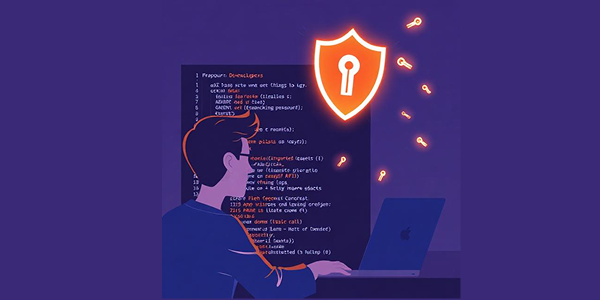
One of the most dangerous yet surprisingly common mistakes is embedding passwords, API keys, and tokens directly in source code. Developers do this for convenience during testing, then forget to remove them before committing to version control.
The Risk: Once credentials are in your repository, they’re exposed to anyone with access. Even if you delete them in a later commit, they remain in Git history forever.
How to Avoid It:
- Use secret management tools like HashiCorp Vault, AWS Secrets Manager, or Azure Key Vault
- Implement pre-commit hooks that scan for secrets before code is pushed
- Use environment variables or configuration files that are excluded from version control
- Regularly audit your repositories with tools like GitGuardian or TruffleHog
2. Skipping Security in CI/CD Pipelines
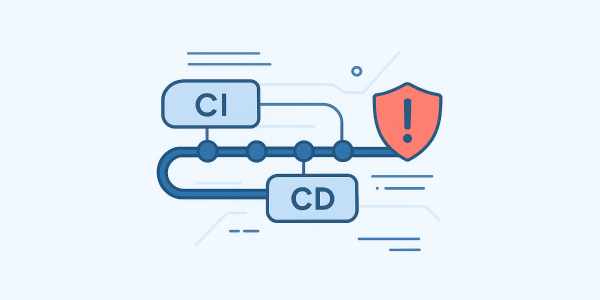
Many teams treat security as a final checkpoint before production rather than integrating it throughout the development lifecycle. This “security as an afterthought” approach leads to vulnerabilities slipping through undetected.
The Risk: Security issues discovered late in the pipeline are expensive and time-consuming to fix, often causing delays or forcing teams to choose between security and deadlines.
How to Avoid It:
- Shift left by incorporating security testing early in the CI/CD pipeline
- Implement automated security scanning at every stage (SAST, DAST, SCA)
- Use tools like Snyk, SonarQube etc to scan code automatically
- Make security checks a mandatory gate that must pass before deployment
- Create a culture where failed security checks are treated as seriously as failed tests
3. Using Vulnerable Dependencies
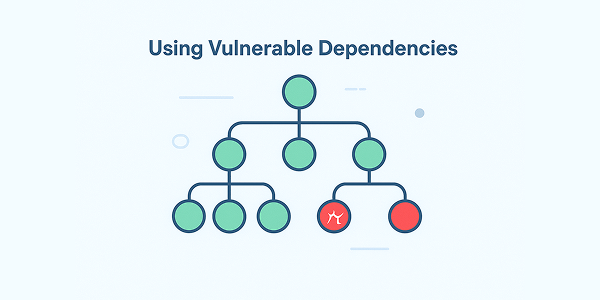
Modern applications rely on hundreds or thousands of open-source libraries and dependencies. Each one represents a potential security vulnerability, yet many teams never systematically check them.
The Risk: A single vulnerable dependency can expose your entire application. High-profile breaches have shown how quickly attackers exploit known weaknesses.
How to Avoid It:
- Implement Software Composition Analysis (SCA) tools in your pipeline
- Regularly update dependencies and maintain an inventory of all third-party code
- Use tools like Dependabot, Renovate, or Snyk to automate dependency updates
- Establish policies for quickly patching critical vulnerabilities
- Consider using private package repositories to control what dependencies can be used
4. Overprivileged Service Accounts
The principle of least privilege is often ignored in DevOps environments, with service accounts and CI/CD tools granted far more permissions than they need to function.
The Risk: If an attacker compromises an overprivileged account, they gain extensive access to your infrastructure, potentially allowing them to steal data, modify systems, or launch further attacks.
How to Avoid It:
- Audit all service accounts and reduce permissions to the minimum required
- Implement role-based access control (RBAC) across your infrastructure
- Use just-in-time access provisioning where possible
- Regularly review and rotate credentials
- Implement the principle of least privilege as a default policy, not an exception
5. Neglecting Container Security
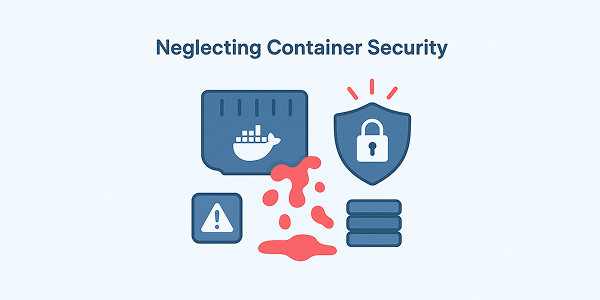
Containers have revolutionized application deployment, but they’ve also introduced new security challenges. Many teams treat containers as black boxes without considering what’s inside them.
The Risk: Containers built from vulnerable base images or running as root can be compromised, providing attackers with a foothold in your infrastructure.
How to Avoid It:
- Scan container images for vulnerabilities before deployment using tools like Trivy or Clair
- Use minimal base images (Alpine Linux, distroless containers)
- Run containers as non-root users
- Implement image signing and verification to ensure integrity
- Regularly rebuild images to incorporate security patches
- Use container runtime security tools like Falco to detect anomalous behavior
6. Insufficient Logging and Monitoring
Without proper logging and monitoring, you’re essentially flying blind. Many security incidents go undetected for months simply because no one was watching for signs of compromise.
The Risk: Delayed detection means attackers have more time to establish persistence, exfiltrate data, and cause damage. By the time you discover a breach, the harm may be irreversible.
How to Avoid It:
- Implement centralized logging using tools like ELK Stack, Splunk, or Datadog
- Monitor security-relevant events (failed logins, privilege escalations, configuration changes)
- Set up alerts for suspicious activities
- Establish baseline behavior patterns and detect anomalies
- Regularly review logs and conduct security audits
- Ensure logs are tamper-proof and retained according to compliance requirements
7. Misconfigured Cloud Resources
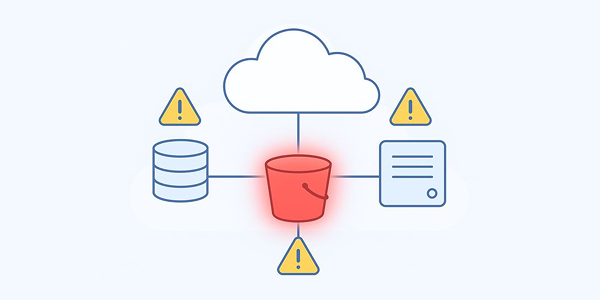
The shared responsibility model in cloud computing often leads to confusion about who’s responsible for what. Misconfigured S3 buckets, overly permissive security groups, and exposed databases are alarmingly common.
The Risk: Public cloud misconfigurations have led to some of the largest data breaches in recent years, exposing millions of customer records.
How to Avoid It:
- Use Infrastructure as Code (IaC) to standardize and version control configurations
- Implement automated compliance scanning with tools like Prowler, CloudSploit, or AWS Config
- Enable cloud provider security services (AWS GuardDuty, Azure Security Center, Google Cloud Security Command Center)
- Regularly audit your cloud environment for misconfigurations
- Implement tagging and resource governance policies
8. Ignoring Infrastructure as Code Security
IaC brings consistency and repeatability to infrastructure management, but the security of your IaC templates is just as important as the infrastructure they create.
The Risk: Security flaws in your Terraform, CloudFormation, or Ansible code will be replicated across every environment they provision, multiplying the impact of a single mistake.
How to Avoid It:
- Scan IaC templates for security issues before deployment using tools like Checkov or Terrascan
- Implement code review processes for infrastructure changes
- Use policy-as-code frameworks like Open Policy Agent (OPA)
- Version control all IaC and treat it with the same rigor as application code
- Test infrastructure changes in isolated environments first
- Maintain a library of approved, secure IaC modules
9. Lacking an Incident Response Plan
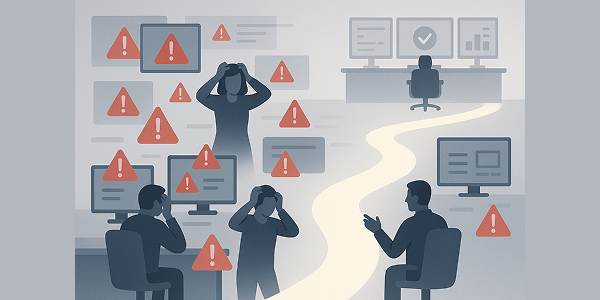
Many organizations focus so heavily on prevention that they neglect to plan for what happens when (not if) a security incident occurs. Without a clear incident response plan, chaos ensues when something goes wrong.
The Risk: Poor incident response leads to longer recovery times, greater damage, and potentially severe compliance penalties. Teams waste valuable time figuring out who should do what instead of containing the threat.
How to Avoid It:
- Develop and document a comprehensive incident response plan
- Define roles and responsibilities clearly
- Conduct regular tabletop exercises and simulations
- Establish communication protocols for security incidents
- Maintain up-to-date contact information for all stakeholders
- Implement automated playbooks for common incident types
- Review and update the plan after every incident or drill
10. Treating Security as Someone Else's Problem
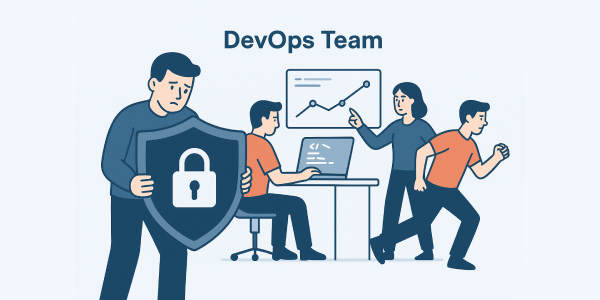
Perhaps the most fundamental mistake is the belief that security is solely the responsibility of a dedicated security team. When developers and operations staff don’t feel ownership over security, vulnerabilities multiply.
The Risk: Security teams can’t catch everything, and they shouldn’t have to. When security is siloed, issues slip through the cracks and the security team becomes a bottleneck rather than an enabler.
How to Avoid It:
- Foster a culture of shared responsibility for security
- Provide regular security training for all team members
- Make security metrics visible to everyone
- Reward proactive security behavior
- Empower developers with security tools they can use themselves
- Include security considerations in sprint planning and retrospectives
- Create security champions within development teams
Conclusion
DevOps security doesn’t have to slow you down. You can incorporate security into your development process without compromising speed or agility by proactively addressing these frequent errors. The secret is to move security to the left, automate when you can, and cultivate a culture where everyone is accountable for safeguarding your data and systems.
Remember, security is not a destination but a continuous journey. Prioritize fixing the most serious weaknesses in your system before progressively improving your security procedures over time. DevOps security investment will pay off in the form of lower risk, quicker incident response, and increased customer trust in the future.
What security practices has your team implemented? Which of these mistakes have you encountered? The conversation around DevOps security is always evolving, and we can all learn from each other’s experiences.